



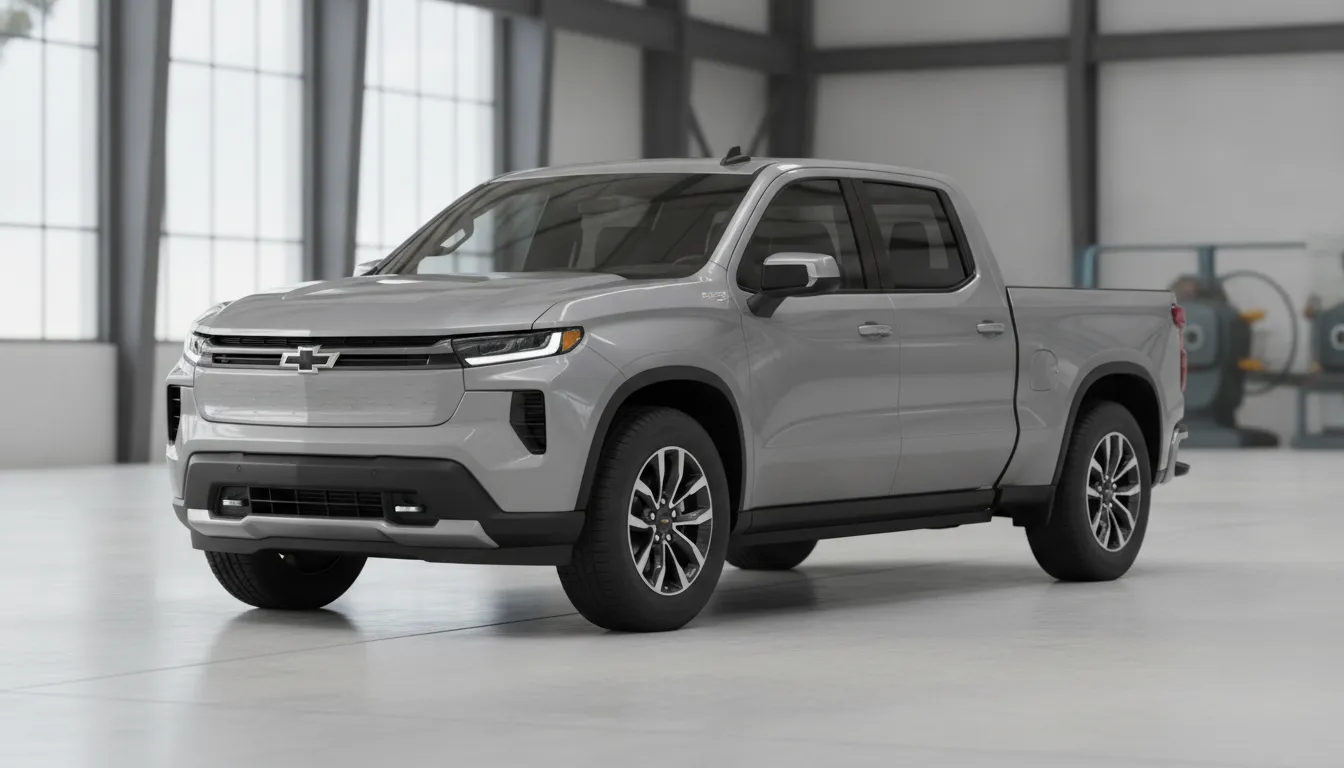
A long range number is a starting point, not a promise about your week. Chevrolet Silverado EV range and charging depend on the exact truck, the battery pack, the charger you can actually use, and how you drive. Two trucks with the same badge can carry different window labels. Cold mornings, highway speed, a loaded bed, and a trailer all change the result.
Book a test drive at (203) 655-2551
H & L Chevrolet in Darien can walk through the label on a specific new Silverado EV with you. The dealership is at 1416 Post Road and serves shoppers from Stamford, Norwalk, Greenwich, Westport, and nearby Fairfield County towns. This guide covers the questions worth asking before you request a drive. It does not quote a price, a payment, or a truck that is sitting on the lot today.
What Should You Check on a Silverado EV Range Label?
Start with the truck in front of you. The EPA range on the window label is the figure tied to that configuration. A headline that says "up to" a certain mileage describes the longest published estimate in the lineup, not every Work Truck, LT, or Trail Boss.
Chevrolet's May 21, 2025 announcement for the 2026 Silverado EV lists these ranges on a full charge with standard content.
| 2026 trim | Battery pack | Published range |
|---|---|---|
| Work Truck | Standard | 286 miles, EPA-estimated. |
| Work Truck | Extended | 424 miles, EPA-estimated. |
| Work Truck | Max | 493 miles, EPA-estimated. |
| LT | Standard | 283 miles, EPA-estimated. |
| LT | Extended | 410 miles, EPA-estimated. |
| LT | Max | 478 miles, GM-estimated. |
| Trail Boss | Extended | 410 miles, EPA-estimated. |
| Trail Boss | Max | 478 miles, GM-estimated. |
The U.S. Department of Energy's FuelEconomy.gov listings for 2026 match three of those EPA totals: 424 miles for the extended-range Work Truck, 410 miles for an extended-range model, and 493 miles for the max-range Work Truck. Read the 2026 Silverado EV fuel-economy listings beside the window sticker, because equipment such as wheel size can change the rated truck.
A GM-estimated figure is not the same kind of number as an EPA estimate. Chevrolet calls the 478-mile LT and Trail Boss Max figures development estimates that can change. It also says real range varies with temperature, terrain, battery age, loading, use, and maintenance. If a sticker and a brochure disagree, trust the sticker on that VIN.
Older model pages tell a different story. The Silverado EV details page for the 2024 RST cites 440 miles of GM-estimated range. The 2026 Silverado EV page leads with up to 493 miles EPA-estimated. Ask which year and battery pack you are looking at before you compare those headlines.
How Do Battery Pack and Equipment Change the Estimate?
Battery pack is the first split. On the 2026 lineup Chevrolet published, Work Truck and LT can be ordered with Standard, Extended, or Max packs. Trail Boss starts at Extended. Moving from Standard to Extended is the difference between roughly 280 miles and roughly 410 to 424 miles on those EPA rows. Max is the pack behind the 493-mile Work Truck figure.
Equipment moves the number too. Larger wheels, all-terrain tires, and a lifted suspension add rolling resistance. That is why a Trail Boss with the Extended pack is listed at 410 miles while a Work Truck with the Extended pack is listed at 424. The off-road truck is built for clearance, not for the longest label.
Ask these questions about the specific truck:
- Which battery pack is installed: Standard, Extended, or Max?
- Is the range on the label an EPA estimate or a GM estimate?
- What wheel and tire package is on the truck, and does the label match that package?
- Does this truck include the onboard charger rate you need at home?
Do not borrow a number from a different Chevrolet EV. The Blazer EV range and charging guide covers an electric SUV with its own trims and charge rates. A Blazer figure will not tell you what a Silverado EV pickup will do with a bed full of material or a trailer on the hitch.
Chevrolet Silverado EV Range and Charging at Home
Home charging is the habit that makes an electric truck workable. Chevrolet lists two Level 2 onboard rates for the Silverado EV. Standard trucks accept up to 11.5 kW of AC charging. Trucks equipped for the higher rate accept up to 19.2 kW. A wall charger can only deliver what the truck and the circuit both allow. A 11.5 kW truck on a 19.2 kW charger still charges at the truck's limit.
Chevrolet's 2026 charging notes also list about 37 miles of range per hour from a 240-volt Level 2 session at up to 19.2 kW, in suitable conditions. That is an illustration, not a timer you can set. A colder battery, a higher starting charge, or a lower-output home unit will add fewer miles per hour. The included dual-level charge cord supports 120-volt and 240-volt charging, and a new outlet may need professional installation.
Before you count on overnight charging, confirm four things where the truck will park:
- You have a dedicated parking spot where a cord can reach the charge port without crossing a walkway.
- The electrical service can support a 240-volt circuit at the amperage the charger needs.
- You know whether this VIN's onboard charger is the 11.5 kW rate or the 19.2 kW rate.
- You have a backup plan, such as a public charger, for nights you cannot charge at home.
Panel upgrades, permits, and charger installation are a separate project. This article does not specify wire size or a contractor. If you rent, or if you park on the street, say so during the visit. A long EPA number does not help if the truck cannot charge where it sits overnight.
What Should You Ask About Public Charging?
Public charging covers the trips that outrun a home charge. DC fast charging speed on the Silverado EV depends on the battery pack and the station. Chevrolet's fleet specifications for 2026 list up to 220 kW on the 400-volt standard pack. Extended and Max packs use 800-volt charging, listed up to 300 kW or 350 kW. The May 2025 Trail Boss release pairs those peaks the same way: 220 kW standard, 300 kW extended, and 350 kW max.
A peak rate is the ceiling, not the whole stop. Charging slows as the battery fills, and a station may deliver less than its posted maximum. Chevrolet has also described about 100 miles of range in 10 minutes as a GM estimate under favorable conditions. Plan the stop, not the peak. Starting near a low state of charge, with a warm battery and an open high-output stall, is when those short stops are most realistic.
On a test drive visit, ask the product specialist:
- Which charge port and public-charging access this model year uses, and whether an adapter is needed for the networks you already use.
- Whether this battery pack is the 220 kW class or a higher 800-volt class.
- How the myChevrolet app is used to find stations and plan a route for this truck.
- What a typical highway stop looks like from 10 percent to 80 percent, rather than a 10-minute best case.
H & L Chevrolet can point you to new Silverado EV inventory and to the model research pages. The team cannot see your driveway, your panel, or the stall you will use in Stamford or Norwalk. Bring those details with you.
What Changes Real-World Range After You Leave the Lot?
The window label assumes a standard test. Your week will not. Chevrolet states that actual range varies with temperature, terrain, battery age and condition, loading, use, and maintenance. For a full-size electric pickup, the swing can be large.
Cold weather is the one Fairfield County drivers notice first. Cabin heat draws energy that a mild day would have used for miles. A cold battery also accepts a fast charge more slowly until it warms up. Highway speed matters next. The jump from a 55 mph cruise to a 75 mph run on I-95 raises energy use more than the same change would in stop-and-go traffic. A headwind and a loaded bed do the same kind of work against the truck.
Trailering is its own range event. The 2026 Silverado EV pages cite up to 12,500 pounds of available trailering on equipped trucks. Towing near that rating will not return the unloaded EPA number. If you tow, ask for the trailering guidance for that VIN and plan charging stops as if the label were a comparison tool, not a travel promise.
A few driving habits give some of that energy back. One-Pedal Driving slows the truck when you lift off the accelerator and can recover energy in traffic. Regen on Demand lets you trigger extra slowing by hand. Neither feature raises the EPA label. Both can make a local Darien-to-Greenwich loop use less energy than a hard stop-and-go style.
Use the label to compare trucks. Use your own route to judge a truck. A shopper who drives 40 miles a day on local roads is asking a different question than a shopper who runs to Westchester and back with cargo. Tell the specialist which of those weeks is yours.
Which Questions Belong on a Test Drive?
A test drive is the right time to connect the label to the seat. You will not reproduce a 400-mile day in half an hour. You can confirm that the truck you might buy is the truck the numbers describe.
Bring a short list:
- Read the window label together and match the year, trim, and battery pack to the published row.
- Ask which onboard AC rate this VIN has, 11.5 kW or 19.2 kW.
- Ask which DC fast-charge class applies, and what connector or adapter a public stop requires.
- If you tow or carry long material, ask how load changes range and whether the Multi-Flex Midgate is on this truck.
- Ask how to watch energy use on the 11-inch driver display and the 17.7-inch center screen during the drive.
Then drive the kind of road you actually use. A few miles on Post Road show how One-Pedal Driving feels in local traffic. A short highway stretch shows wind and speed. Neither replaces the label, and neither should be turned into a personal range claim.
When you are ready, book a test drive or contact the sales team and name the Silverado EV configuration you want to review. You can also search new Silverado EV inventory before you come in. Inventory changes, so confirm the truck with the store rather than assuming a web listing is still available.
Call (203) 655-2551 to request a Silverado EV test drive
Frequently Asked Questions
Does every Silverado EV have 493 miles of range?
No. Chevrolet lists 493 miles as the EPA-estimated range for a 2026 Work Truck with the Max battery pack. Other 2026 rows run from 283 miles on a Standard-pack LT to 424 miles on an extended-range Work Truck. Some Max-pack LT and Trail Boss figures are GM estimates of 478 miles, not EPA estimates. Read the label on the truck you are considering.
How long does home charging take?
It depends on the onboard charger, the wall unit, and the starting battery level. Chevrolet describes up to 11.5 kW on standard trucks and up to 19.2 kW when the truck is equipped for that rate. One published illustration is about 37 miles of range per hour at up to 19.2 kW on a 240-volt Level 2 charge. A 120-volt cord is slower and is a backup, not a daily plan for a full-size truck.
Can I use a public fast charger?
Yes, when the station matches this truck's charge port and the stall is working. Peak rates published for 2026 are up to 220 kW on the standard pack and up to 300 kW or 350 kW on extended and max packs. The rate falls as the battery fills, and cold weather slows the session. Ask which connector or adapter the model year on the lot requires.
Will towing cut the range a lot?
Expect a meaningful drop. Chevrolet says actual range varies with loading and how you use the truck, and equipped 2026 models list up to 12,500 pounds of available trailering. The EPA number is not a towing number. If a trailer is part of the job, bring the trailer weight to the conversation and plan more charging stops than the unloaded label suggests.
Where can I review a Silverado EV near Darien?
H & L Chevrolet is at 1416 Post Road, Darien, CT 06820. Shoppers from Stamford, Norwalk, Greenwich, Westport, New Canaan, and other nearby towns can review Silverado EV details, search current inventory, and book a test drive. Call (203) 655-2551 and ask for the year, trim, and battery pack you want to confirm.