


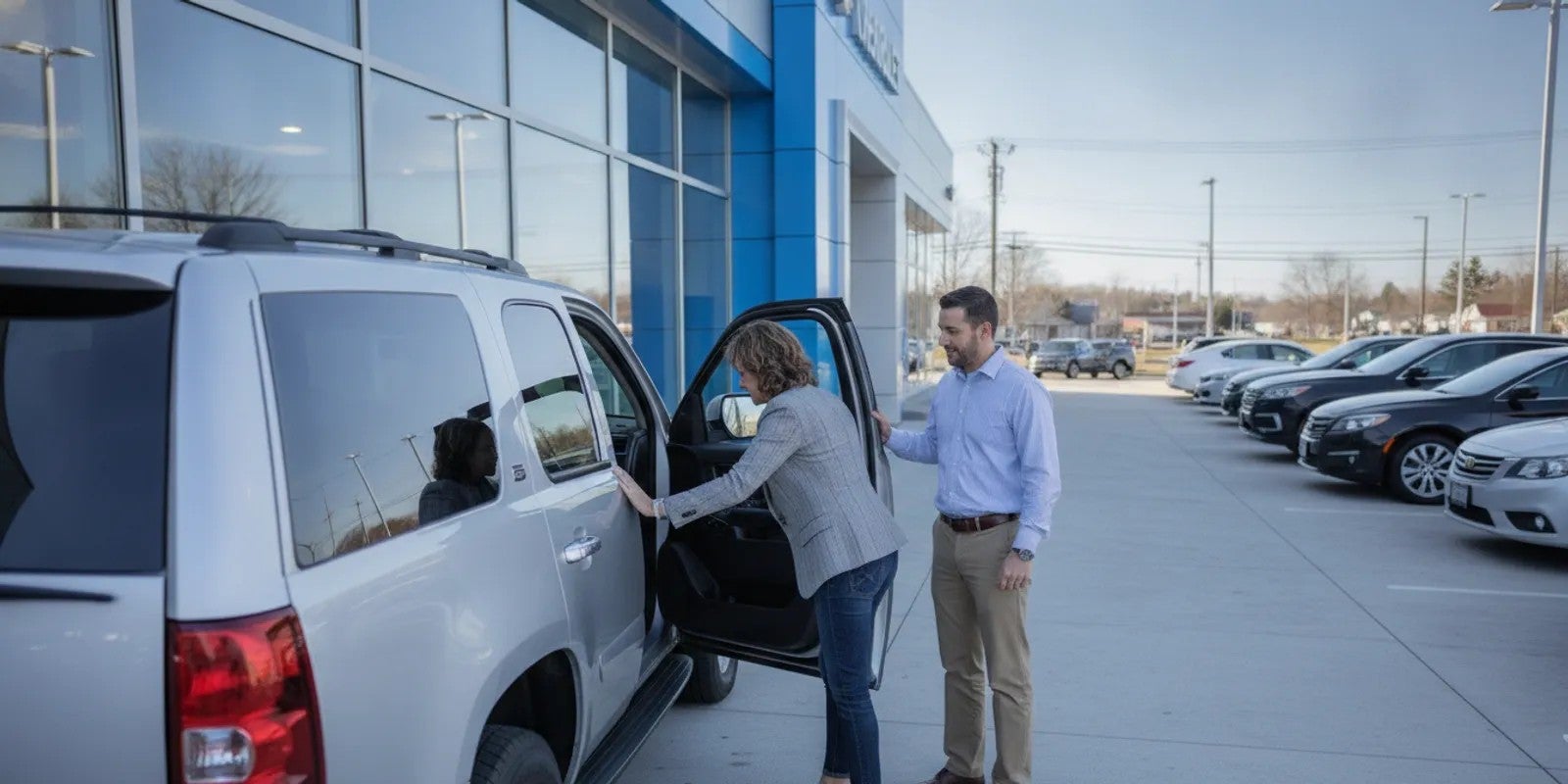
If you are looking for a used car dealership in New Canaan, CT, compare more than search results: consider how clearly each dealership can help you evaluate a particular vehicle. A sound decision connects your daily needs with vehicle details, condition information, documents, and a test drive. H & L Chevrolet is located in Darien and serves shoppers from New Canaan and nearby communities.
Start with the job your next vehicle needs to do
Before comparing dealerships or clicking through a long list of vehicles, describe an ordinary week. How many people usually ride with you? What do you carry? Are most trips short and local, or do you spend substantial time on highways? Where do you park at home and at work? The answers help turn a broad search into a useful set of requirements.
Think in routines rather than exceptional days. A vehicle may need room for a child seat every day, sports equipment twice a week, groceries on weekends, and luggage only a few times a year. Identify which of those needs are non-negotiable and which are occasional. This will help you compare actual usefulness instead of favoring a vehicle because one feature sounds appealing in a listing.
- People: Count regular passengers, and consider whether child seats, a booster, or mobility equipment must fit at the same time.
- Cargo: Name the largest things you routinely carry. Consider the shape and opening of the cargo area, not just its general size.
- Driving pattern: Write down the balance of local errands, commuting, highway driving, and longer trips.
- Parking: Take into account a garage, driveway, narrow street, or space where maneuvering and visibility matter.
- Features: Separate required equipment from features that would be pleasant but are not essential.
A written list makes it easier to say no to a vehicle that does not fit, even if it looks attractive online. It also gives you a consistent way to discuss your needs with more than one dealership. Keep the list short enough to refer to during a visit. If it becomes a catalog of every feature you have ever considered, mark the few requirements that truly determine whether the vehicle works for you.
How should a New Canaan shopper compare dealerships?
A useful comparison is not just a ranking of businesses. It is a way to decide whether a specific vehicle and the information available about it deserve more of your time. Start with the dealership’s process for identifying a vehicle, checking whether it can be viewed, reviewing available details, arranging a test drive, and getting questions answered. Those steps matter whether you found a vehicle through a search page or heard about it another way.
Pay attention to clarity. Can you tell which vehicle the conversation concerns? Does the answer distinguish confirmed information from details that still need to be checked? Is it clear what you should do next? Clear, specific answers help you make a decision. A listing that is detailed in one area but silent in another is not necessarily a bad choice; it is a reason to ask a focused follow-up rather than fill the gap with an assumption.
H & L Chevrolet has one reported physical dealership at 1416 Post Road in Darien. New Canaan is part of its stated market area, not a separate H & L Chevrolet location. You can begin with the dealership’s used vehicle search, then verify the particulars of any vehicle that interests you before planning a visit. A search result is a research starting point, not a guarantee that a particular vehicle remains available or will meet your needs.
Keep your own comparison notes neutral. Instead of writing that one dealership “seemed better,” record what was answered, what remains unknown, and what the next step would be. This gives you a concrete basis for deciding where to spend time and which vehicle merits closer review.
Turn everyday needs into a short vehicle checklist
Once you know what the vehicle must do, turn those needs into things you can verify in a listing or in person. For passenger space, note the number of seats you need and bring the people or equipment that can help you check the arrangement. For cargo, identify whether you need a flat floor, a wide opening, a low lift-over point, or a way to fold or move seats. For parking, consider the size of the space where the vehicle will live and how easily you can see around it.
Use three categories: required, preferred, and irrelevant. A required item can eliminate an otherwise appealing vehicle. A preferred feature can help distinguish two vehicles that both meet your basic needs. An irrelevant detail should not take time away from questions that affect fit, condition, or ownership. These categories are personal; there is no universal checklist that can tell every shopper which features matter.
For example, a household that regularly travels with several passengers may prioritize access to the rear seating area and enough room for everyone’s usual belongings. A driver who mostly commutes alone may place more weight on seating comfort, visibility, and ease of parking. Someone who carries bulky equipment should check the dimensions and shape of the cargo opening rather than assume that a vehicle with a larger-looking exterior will be more practical. Those examples are prompts, not conclusions about any particular model.
When a detail is important, verify it on the exact vehicle. Model names and trim descriptions can cover different equipment, and used vehicles may have different histories and configurations. Ask the dealership to confirm the feature on the vehicle you are discussing, and inspect or operate it during a visit when appropriate. Mark information that has not been confirmed as “unknown” on your notes.
How can you compare online listings without assuming availability?
Online listings are useful for narrowing a search, but a page can be incomplete or may no longer reflect the current status of a vehicle. Inventory changes, and photos or descriptions cannot answer every question about condition or equipment. Before traveling, contact the dealership and identify the exact listing you mean. Ask whether that vehicle is currently available to view and what information has changed since the listing was posted.
Use more than a broad model name to identify the vehicle. Record the year, make, model, trim if listed, and the listing identifier or vehicle identification number (VIN) if it is provided. Share those details when you ask a question. This reduces the risk of discussing a similar vehicle instead of the one you reviewed. If a listing changes or disappears, ask whether the vehicle’s status has changed rather than relying on an old screenshot or a search-engine preview.
Read listing details in a disciplined way. Write down what is explicitly shown, what is missing, and what you need to confirm. A photo may show an object or feature without establishing that it is included or in working order. A description may not answer a question about wear, previous repairs, or documentation. Treat gaps as questions, not proof for or against the vehicle.
If you are comparing several listings, keep one row of notes per vehicle. Record the source and date you viewed the information, the identifying details, the questions you asked, and the answers you received. If a detail changes, update the note and keep the earlier information marked as out of date. That small habit can prevent confusion when several vehicles have similar names or features.
What should you ask about a used vehicle’s condition and history?
Condition belongs to the individual vehicle, not just its model or age. Ask what history, inspection, and condition information is available for the particular vehicle. Request explanations for terms you do not recognize. If you have a concern about a particular area, say what you noticed and ask what information can address it. The purpose is to understand what is known and what remains uncertain before you decide.
A vehicle-history report may provide background, but it should not be treated as a complete record of everything that has happened. A report may not capture every event or repair. Similarly, an exterior that looks clean does not by itself establish the condition of the vehicle’s mechanical systems. Combine the information you can review with a careful walkaround, a test drive, questions, and, if it is part of your decision, an independent inspection.
During a walkaround, take your time and look in good light if possible. Check the exterior from more than one angle. Look at the interior, storage areas, visible wear, and the condition of items you will use often. Note questions about warning lights, keys, repairs, equipment, or anything that seems inconsistent with the listing. You are not expected to diagnose the vehicle; make a list of what you observed and ask for an explanation.
- What condition information is available for this exact vehicle?
- Can I review vehicle-history details and any available inspection records?
- Are there repairs, wear items, or features I should understand before a test drive?
- Can I arrange an independent inspection before making a decision?
- Which documents will be available to review as part of the purchase discussion?
Listen for whether the answer is about the specific vehicle or only about its model in general. If an answer does not resolve your concern, ask a more precise follow-up. You can also make a note to verify the point through an inspection or another appropriate source. There is no need to convert an unanswered question into a conclusion: keep it open until you have enough information to decide how important it is.
Compare information consistently with a simple worksheet
When you visit more than one dealership or consider more than one vehicle, use the same questions each time. Otherwise, one vehicle may appear more appealing simply because you asked more questions about it or remember its details more clearly. A worksheet does not have to produce a numeric score. Its job is to keep facts, open questions, and personal impressions separate.
| Comparison area | Question to ask | What to record |
|---|---|---|
| Identity | Which exact vehicle are we discussing? | Year, make, model, trim, and listing ID or VIN if available. |
| Availability | Can I confirm this vehicle is available to view? | When you checked and the answer given. |
| Fit | Can I test the seating, entry, visibility, and cargo arrangement? | What worked for your actual routine and what did not. |
| Condition | What history, inspection, and condition details can I review? | Documents seen, explanations received, and remaining questions. |
| Test drive | How can I arrange to drive this vehicle? | Whether you drove it and the observations to discuss. |
| Documents | What purchase documents and vehicle details can I review? | Which documents are available and what needs clarification. |
| Next step | What action do I want to take after reviewing the answers? | Follow-up, another visit, independent review, or no further action. |
Do not let the worksheet imply that every answer has equal importance. An unknown about a feature you never use may not matter. An unknown about a requirement that determines whether the vehicle works for your family may be central. Add a column for “importance to me,” or simply mark each open item as essential, useful, or low priority. The purpose is to make your own priorities visible, not to judge a dealership by a formula.
When comparing dealerships, note the quality of the process separately from the vehicle itself. Were your questions understood? Were you given a clear next step? Did the information distinguish confirmed details from unconfirmed ones? A helpful process can make research easier, but it cannot replace your evaluation of the specific vehicle.
How do you consider budget without relying on incomplete figures?
Set a spending boundary that is realistic for your household before you begin visiting dealerships. Keep that boundary private if you prefer, or use it to explain what kind of vehicle you are seeking. When discussing a particular vehicle, request its current transaction details and review the relevant documents directly. Do not rely on an old screenshot, a search preview, or a number remembered from a different listing as a current figure.
Separate the vehicle’s purchase discussion from the broader costs of owning and using it. Depending on the vehicle and your circumstances, you may want to research insurance, fuel or charging, routine maintenance, tires, registration, and other expenses. Those amounts vary by driver, vehicle, use, and location. Gather information relevant to your own situation rather than assuming a general statement applies to you.
For a shopper looking below a chosen ceiling, treat the budget as a filter to investigate, not as a promise that a certain quantity of vehicles will meet it at any given time. Listings and vehicle details can change. Confirm the current information for the exact vehicle, and consider whether it meets your must-haves before spending time on a visit. A low initial figure cannot answer questions about fit, history, condition, or the rest of the transaction.
A useful budget conversation has a few distinct parts. First, identify the vehicle you are discussing. Next, ask for current details and clarify what is included or still to be reviewed. Then take time to understand the documents rather than making a decision from a short verbal summary. If a term or figure is unfamiliar, ask for an explanation in plain language. Do not treat an estimate, a broad model page, or a general statement as a final figure for a specific vehicle.
Prepare for a test drive that answers real questions
Arrange your visit in advance and confirm which vehicle you plan to see. Bring your checklist and, when useful, the people who will regularly ride in the vehicle. Consider bringing any item whose fit matters, such as a child seat or a piece of equipment, provided it is practical and appropriate to do so. Confirm any arrangements with the dealership rather than assuming a particular vehicle will be ready when you arrive.
Before driving, take a few minutes to adjust the seat and mirrors. Check whether you can reach the controls you use, understand their basic operation, and see adequately from the driver’s seat. Notice how easy it is to enter and exit. Ask about features you do not know how to operate rather than guessing while driving. If more than one person will use the vehicle, let each regular driver assess the seating and controls where practical.
During the drive, pay attention to your experience: comfort, visibility, steering feel, braking feel, sounds, and how the vehicle responds in ordinary conditions. Follow the route and instructions agreed with the dealership. Do not try to test a vehicle in a way that is unsafe or outside the permitted route. A test drive is a chance to notice questions and assess basic fit; it is not a complete mechanical evaluation.
Afterward, record your observations promptly. Separate “I liked the seating position” from “I need to confirm the history information,” because one is a personal impression and the other is an unresolved fact. If something seemed unusual, describe what you experienced without deciding what caused it. Ask the dealership what information can help clarify it and whether additional review makes sense.
What should you review before making a decision?
Ask which documents and vehicle details are available for review and when you can examine them. Confirm that identifying details on the paperwork correspond to the vehicle you inspected. Read each document carefully and ask for an explanation of any term, condition, or figure you do not understand. If you need additional time to read, ask for it rather than signing before you are comfortable with what the documents say.
Keep the discussion tied to the exact vehicle. Ask how any statements about equipment, condition, eligibility, or included terms apply to its identifying details. A general description of a program does not establish that every used vehicle is included. If a vehicle is described as certified or associated with a particular program, ask whether that specific VIN qualifies and request the applicable terms. Used does not automatically mean certified or enrolled in a program.
Make a short list of the documents or answers you still need. It might include vehicle identity, condition details, the current transaction information, or a written explanation of a term. Decide which outstanding questions must be resolved before you continue and which are simply useful to know. You are responsible for deciding whether you have enough information; do not let the pace of a conversation substitute for your own review.
If you are comparing several vehicles, review the same categories for each one before choosing. A vehicle that seems familiar because you drove it first should not get a pass on questions you asked about the others. Return to the written checklist, verify details that matter, and make sure your conclusion reflects both how the vehicle fits and what you have learned about its condition and documents.
Make the visit efficient without rushing the decision
A little preparation can make a dealership visit more productive. Before leaving, identify the vehicle or vehicles you want to ask about, confirm availability, and gather your questions in one place. If a particular feature or dimension matters, mention it in advance so you can ask whether there is a practical way to evaluate it during the visit. Do not assume that an online listing answers questions that are not shown there.
Set a loose order for your visit: confirm the vehicle’s identity, walk around it, check interior fit, review available information, take a test drive if arranged, and record follow-up questions. This is a guide, not a required sequence. If the vehicle is unavailable or does not match the listing, pause and decide whether you want information about another option or would rather end the visit.
Allow enough time to think. A visit can reveal that a vehicle is not suitable, and that is a useful outcome. It may also show that a detail you considered essential is less important in practice, or that a preference deserves more attention. Update your checklist after the visit so your next comparison reflects what you learned rather than repeating assumptions.
If you are traveling from New Canaan to Darien, confirming the specific vehicle and visit plan before setting out can help avoid a trip based on outdated information. The dealership is in Darien; its mention of nearby communities describes its market, not extra locations or a promise of delivery. Decide whether the trip makes sense based on the vehicle information you have and what you want to do in person.
How can you make a clear first inquiry?
A concise message or call can help the dealership understand what you need. Identify the listing using its year, make, model, trim, listing ID, or VIN when available. Then ask for the next piece of information that would help you decide. For example, you might ask whether the vehicle is available to view, what condition information can be reviewed, or how to arrange a test drive. Ask one or two focused questions first; you can follow up after you receive an answer.
- Is this specific listing currently available to view?
- What vehicle-history or condition information can I review?
- Can you confirm the feature or equipment I need on this vehicle?
- How can I arrange a test drive, and what should I plan to bring?
- What documents or current transaction details can I review before deciding?
Be clear about the action you want. Asking for information is not the same as arranging a test drive, requesting a quote, or continuing an online purchase. Those actions can involve different next steps. If your purpose is simply to confirm a detail, say that. If you want to schedule a visit or drive, ask directly how to arrange it. Clear wording helps keep both sides focused on the same task.
Keep a record of the answer and any follow-up. Note when you spoke, which vehicle you discussed, and whether a detail was confirmed or still needs review. If you contact the dealership again, refer to the same identifying information. This simple continuity is helpful when your search includes more than one vehicle or when some time passes between your first question and a visit.
What makes a dealership comparison fair?
Compare like with like. If one dealership is discussing a different vehicle, a different trim, or a different set of documented details, the conversation is not yet an even comparison. Start by confirming the exact vehicle and the information being compared. Then use the same list of needs and questions for each option.
A fair process also recognizes the difference between facts and impressions. “The rear seat fit our child seat during the visit” is an observation. “This model will always be more comfortable” is a broad conclusion the visit may not support. “The dealership gave me a document to review” is specific. “The vehicle has no issues” is not a conclusion you should infer merely because a short conversation did not surface a concern.
Do not award or deduct points based on a missing answer until you know whether the answer is unavailable, not yet checked, or simply not included in the listing. Ask for clarification. If a dealership cannot answer a question immediately, record what it said about obtaining the information and whether that timing works for you. The goal is not to assume bad intent or to accept every statement without review; it is to learn enough to make an informed choice.
Finally, compare the actual vehicle and the process independently. A smooth conversation does not prove that a vehicle is right for your needs. A useful vehicle does not remove the need to understand its history and documents. Both parts belong in your decision, and each should be based on information that applies to the specific vehicle.
Why consider a Darien dealership when you live in New Canaan?
Proximity can make it more practical to see a vehicle, ask follow-up questions, and return if another step is needed. But distance alone should not decide where you shop. Consider whether the particular vehicle merits a visit, whether the information you need can be reviewed, and whether the trip fits your schedule. H & L Chevrolet operates at 1416 Post Road in Darien and names New Canaan among the communities in its market area.
That local connection should be understood accurately. A market-area mention does not mean there is an H & L Chevrolet store in New Canaan, that a particular vehicle is in stock, or that delivery is available. If a listing interests you, confirm its current status and the practical details of visiting before you travel. If the vehicle does not meet your needs, use what you learned to refine your search rather than treating a nearby location as a reason to settle.
For a New Canaan shopper, the right next step may be a question rather than a visit. If the listing leaves a key point unresolved, seek that information first. If you have enough information to assess the basics but need to judge comfort or fit, a test drive and in-person review may be useful. If the vehicle is not suitable, no further action is required on that listing.
How should you use what you learn from the first vehicle?
Your first serious comparison can improve the rest of your search, even if you do not choose that vehicle. You may learn that a feature you thought was essential is less important than access or visibility. You may find that you need more room for a regular passenger or that a cargo opening matters more than overall cargo volume. Write down those lessons as changes to your checklist, not as assumptions about every vehicle in a category.
Keep a “confirmed,” “to verify,” and “not relevant” column for each option. “Confirmed” means you checked the detail on the exact vehicle or reviewed applicable information. “To verify” means you have not yet resolved it. “Not relevant” means the detail does not affect your decision. This method stops unresolved questions from fading from memory and keeps a missing detail from being mistaken for a negative fact.
If the first vehicle does not work, identify why. Was the fit wrong, the information incomplete, a must-have feature absent, or the test-drive experience uncomfortable? Each reason suggests a different next search step. If it was a fit issue, adjust the size or configuration you are considering. If you need more documentation, make that question part of your next inquiry. If the vehicle was simply unavailable, verify availability earlier next time.
Use this feedback loop to get more precise, not to overgeneralize. One disappointing experience does not establish what every dealership or every used vehicle will be like. One successful test drive does not establish that a different vehicle of the same model will feel identical. Carry forward the questions that helped you, and verify each vehicle on its own merits.
What questions help you decide whether to continue?
Before you take another step, pause and answer a few direct questions. Does this vehicle meet the requirements you marked as essential? Have you confirmed its identity and the important equipment? Do you understand what condition and history information is available? Did the test drive answer your questions about comfort and basic fit? Do you know which documents you still need to review?
If the answer to an important question is no, decide what would resolve it. You may need a document, an explanation, an independent inspection, or another visit. Ask for that specific thing. If the information is not available or does not satisfy your needs, it is reasonable to continue your search. If the remaining questions are minor and you have enough information to evaluate the vehicle, you can decide whether to move forward with the purchase discussion.
It can help to discuss the decision with someone who understands how you will use the vehicle. Share the checklist and unresolved questions, not just a favorite photo or a quick impression. Ask them to challenge the assumptions: What has not been confirmed? Which feature matters most in daily use? Is there a reason to slow down and review a document again? A second perspective is most useful when it helps you examine the facts and your priorities.
No checklist can make the decision for you. It can make the decision more orderly, help you compare options consistently, and remind you to verify details before relying on them. Your final choice should reflect your circumstances and the information available about the vehicle you are actually considering.
Where can you begin a used-vehicle search?
When you are ready to look at listings, begin with H & L Chevrolet’s used vehicle search page. Use it to identify vehicles you may want to ask about, then confirm the details that matter for each specific listing. Check whether it can be viewed, identify any unanswered questions, and decide whether a visit or test drive is the right next step. The online search is a starting point rather than a guarantee about current availability.
Approach the next conversation with your short list of needs and the identifying details of the vehicle. Ask for the information you need in order to decide whether it is worth seeing. Keep your budget and ownership considerations in view, but do not let a broad listing description replace a review of the vehicle, its condition information, and applicable documents.
Call to discuss a used vehicle
A careful comparison gives you a clear basis for deciding whether a used vehicle fits your routine, expectations, and next steps.